Start
Sustainability
Sustainability
Sustainability
Design for Recycling
Basis of our research & development
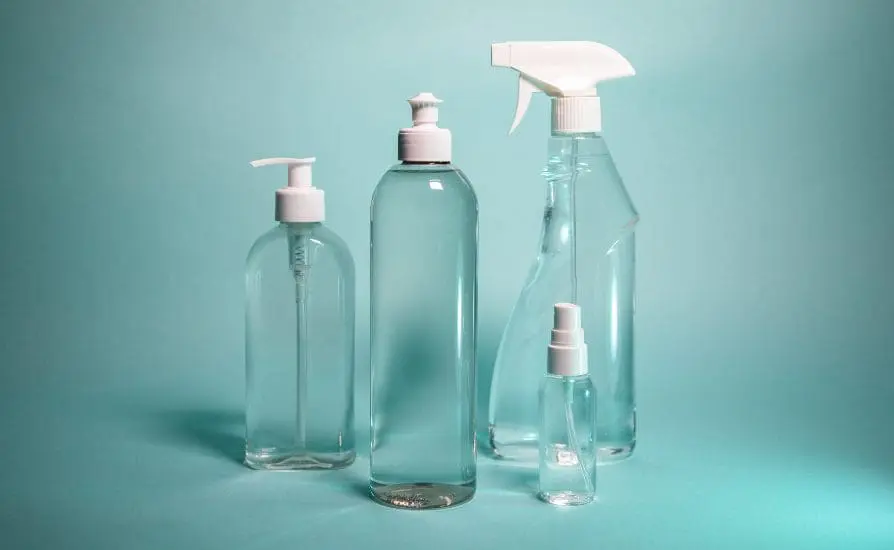
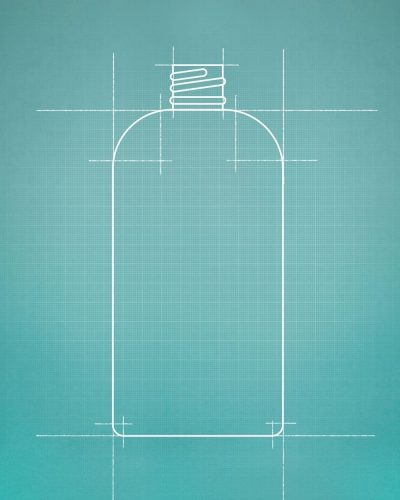
We design our PET packaging sustainably from the very beginning. Thanks to our development and design team, every new product is optimised according to the “Design for Recycling” approach from the first development phase onwards.
Recyclability considered from the outset
- Monomaterial – 100% PET for simple recycling processes
- Development of closures & handles made of 100% PET
- Use of rPET - closed recycling loop with up to 100% rPET content
- Recyclable inks - transparent PET & carbon black-free inks for optimum recyclability
- Weight optimization - only as much packaging as necessary to conserve resources
What does sustainability mean for Eproplast?
Sustainability in the plastics industry involves acting responsibly throughout the entire life cycle of plastic products. This means that we take care to conserve resources, minimise environmental impact and promote long-term ecological, social and economic balance.
For us as a PET bottle manufacturer, sustainability is a high priority. Through resource-efficient production and the use of recycled PET, we contribute to the design of environmentally friendly packaging solutions.
“Design for Recycling” is the most important basis of our research & development.
After all, we think of our packaging as sustainable right from the start. Every new product is optimised for this from the very first development phase:
- Monomaterial - 100 % PET
- Closures & handles made of 100% PET - increasing mono-material share in bottle-closure combination
- Recyclable inks - transparent PET & soot-free inks for 100% recyclability.
- Weight optimisation - only as much packaging as necessary
We have long recognised that a functioning circular economy requires optimised packaging solutions. Packaging must remain in the cycle for as long as possible and be reprocessed into equivalent products via recycling.
In this way, we not only reduce the new production of plastics but also the impact on the environment enormously.
Sustainable thinking - For our customers
Our sustainable approaches also have a positive impact for our customers, whatever their industry. By providing environmentally friendly packaging solutions, we help them achieve their sustainability goals.
By relying on recycled PET and investing immensely in increasingly energy-efficient manufacturing facilities, we strengthen our customers' image as responsible companies and help them position themselves clearly to act in an environmentally conscious way.
Sustainable packaging is a sign of commitment and innovation, which in turn builds consumer confidence and drives our customers' success.
This is how our customers manage to communicate their sustainability efforts at the POS and offer packaging that meets consumer needs and market demands.
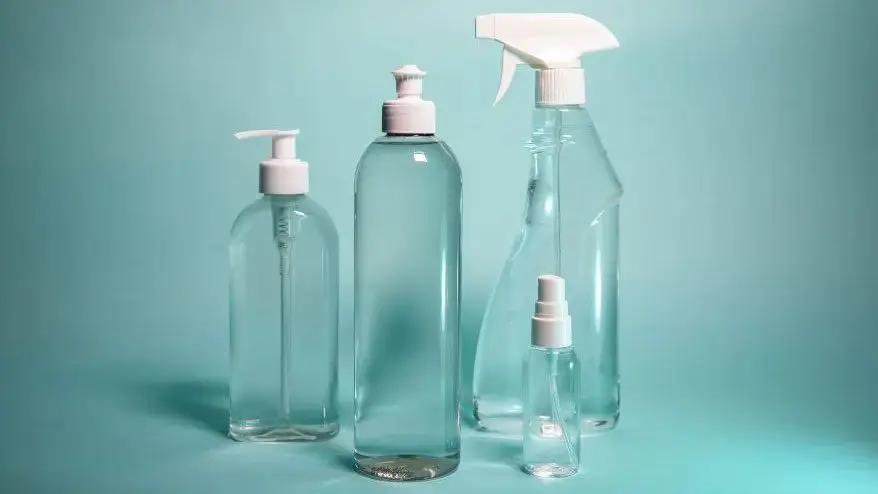
sustainably packaged with PET
Mono material - 100 % PET
PET bottles are characterized by their ease of recyclability. Unlike composite packaging, which consists of several complex layers and is therefore more difficult to separate, PET is a monomaterial. This greatly simplifies recycling processes. PET can be sorted, cleaned, and mechanically recycled as an important recyclable material. Reusing PET from the recycling cycle reduces the use of virgin material.
But we are continuing our research: we have now also been able to switch the handle on our 5L EPROKANISTER to 100% PET. The proportion of foreign plastic in the bottle-cap combination has thus been reduced to the cap.
Recycled PET - conserving resources
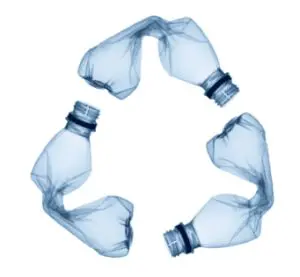
Recycled PET plays a key role in reducing our ecological footprint. Every use of recycled PET reduces the use of virgin material.
We can offer you almost all PET bottles from our range with a recyclate content of 30%, 50% or 100%. We assess this individually based on the respective series.
ENVIRONMENT & RESPONSIBILITY / PET REGRANULATE.
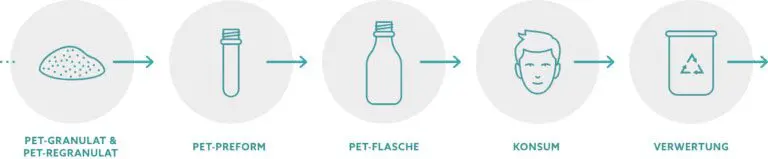
PET bottles and PET containers are environmentally friendly packaging that can be 100% reused. We at who would also mix so-called PET regranulate, which comes from the recycling loop, into the PET granulate. Our state-of-the-art equipment works in an energy-efficient and economical way. In winter, the waste heat from our machinery is used to heat our warehouses and offices. In addition, the entire production process for PET packaging is many times more energy-saving and environmentally friendly than the production of comparable glass products.
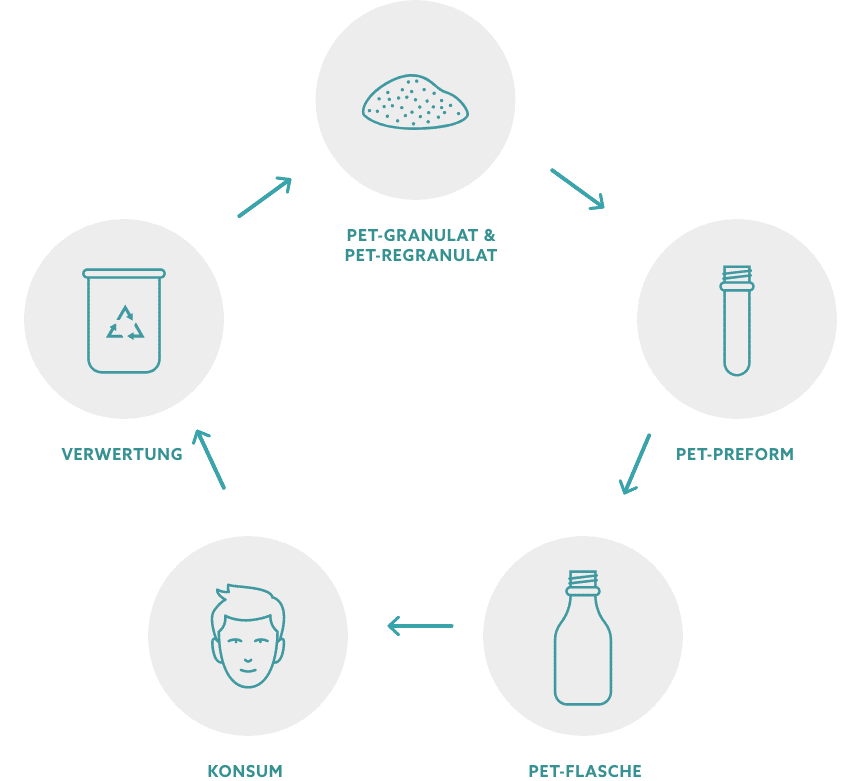
WHY NOT 100% RECYCLED?
CLOSED RECYCLING CIRCUIT THROUGH THE USE OF PET RECYCLATE
In the manufacturing process, there is process-related waste due to washing and sorting. This material (caps, labels, packaging bags, etc.) is used for low-grade applications. Therefore, approximately 70-80% of recycled PET is obtained from old bottles. Of course, the quality of the material is not improved by constant recycling.
However, the quality of the material decreases with frequent recycling. The molecular chains become shorter, making processing more difficult. For continuous production, it is important that new material is mixed with recycled material.
We therefore recommend a recycled content of 50%. Of course, bottles with a different recycled content can also be offered.
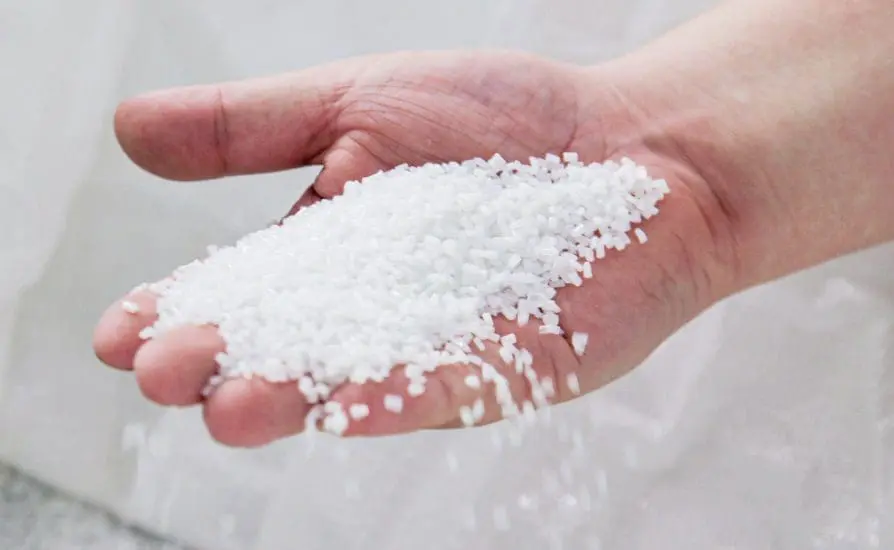
USE OF PET RECYCLATE
EPROPLAST GmbH offers almost all bottles with an rPET content as an option for bottles made of virgin material. The customer can choose between a 30%, 50% or even 100% rPET content.
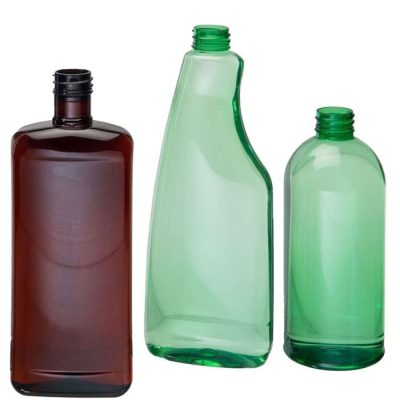
The use of recycled PET has an influence on the intrinsic coloration. The transparent material gets a slightly darker shade of gray. Therefore, many bottles with recycled PET are produced with a coloring agent.
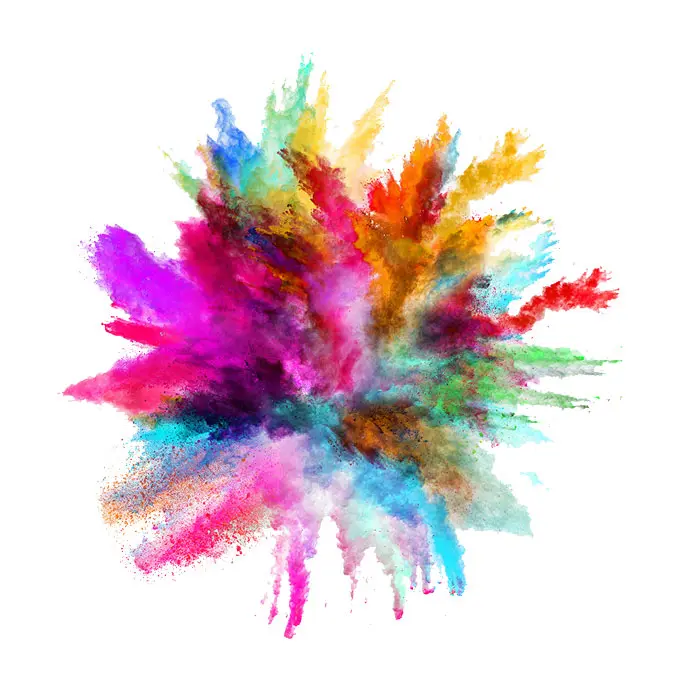
Recyclable inks - transparent & carbon black-free
The color of PET packaging influences whether the recyclable material can be quickly and easily detected in a sorting system using a near-infrared scanner (NIR) and thus be sent for further recycling.
Transparent packaging can be reliably detected and can therefore be recognized and sorted for further recycling. PET packaging in the colors green and blue can also be detected quickly and efficiently using the NIR scanners.
Dark colors, on the other hand, make it more difficult to detect and therefore prevent sorting and recycling. It is better to opt for carbon-free colours, which do not impair detectability and thus keep the material in the recycling loop. At EPROPLAST, we use carbon-free colours exclusively and therefore focus fully on optimum recyclability when it comes to colours as well.
Weight optimization - only as much packaging as necessary
After all, even with PET bottles, less is often more. Less weight means less use of virgin material and a lower use of resources.
Choose from our BOTTLE FINDER the packaging that optimally to fits your product. Here you can see the grammages in which we offer our individual bottles. A reduced bottle weight directly results in a reduced use of raw materials.
Long-term thinking - for our customers
Our Design for Recycling approaches also have a positive impact for our customers, whatever their industry. By providing optimized packaging solutions, we help you to underpin your sustainability goals and communicate them to your customers.
In this way, we strengthen our customers' image as responsible companies and support them in positioning themselves through future-oriented action.
Facts about PET
THE ADVANTAGES OF PET PACKAGING
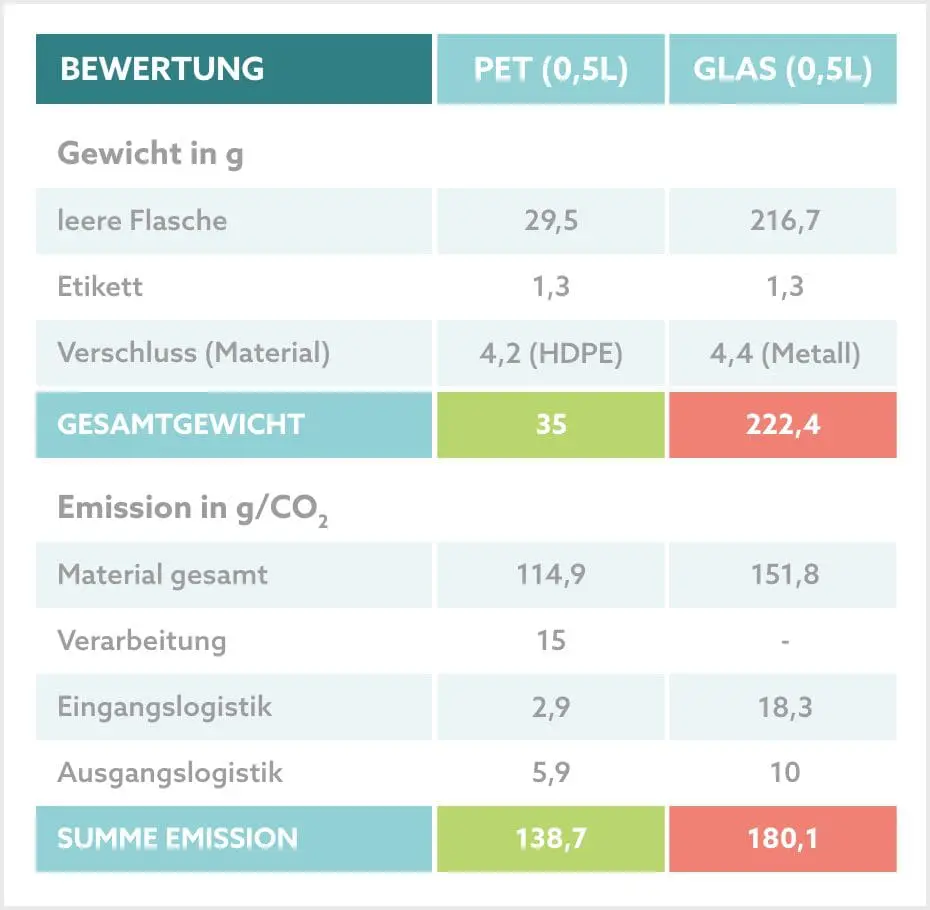
CO2 footprint PET versus glass
Possible alternatives to plastic packaging are increasingly appearing on the market, but on closer inspection they are by no means to be regarded as more sustainable.
To have an objective discussion about packaging and sustainability, figures, data and facts are indispensable. One of the most important indicators is the level of CO2 emissions. To obtain a neutral assessment of this indicator for one of our 500 ml PET hot-fill bottles compared with a glass bottle of the same size, we commissioned ClimatePartner in Munich to calculate the CO2 emissions. Taking into account raw material extraction, production and delivery to the customer, the calculation determined the required Values and the comparison of the results.
PET collection rates at a high level
Taking into account exports of filled bottles abroad and imports of foreign products into Germany, the consumption of PET for beverage bottles was 477 kt. Across all collections (deposit bottles, Petcycle, dual systems, etc.), 456.4 kt of PET was collected again in Germany. This corresponds to a collection rate of 95.7%. If only the collection rate for PET deposit bottles is considered, it is almost 99%. This means that PET as a packaging material has by far the highest collection rate among plastics.
477,0 kt
Total PET beverage bottle consumption in Germany
kt
Total PET bottle collection in Germany
kt
Recycling input in Germany & abroad
kt
Recycling output in Germany & abroad
356,4
kt
Total output rPET in Germany
kt
Usage: Films, fibers & others
121,1 kt
Usage: Bottle to Bottle
A total of around 95% of the PET collected was recycled (rPET) for reuse. Around 34% of the recycled material is used for bottle-to-bottle recycling. The remainder is used for the production of fibers, films, packaging tapes, injection molding applications and non-food PET bottles (cleaning agents, chemicals). The demand for recycled PET in Germany and Europe now exceeds the supply. The sale of used plastics to Asia has practically ceased.
Just to give you an idea of the dimensions. In Germany, a total of 477 kt of PET was consumed for beverage bottles in 2015. In China, the comparable quantity is around 5,000 kt, i.e. more than 10 times as much. Considering that there is no collection system in China comparable to that in Germany, it is clear where marine littering comes from.
5.000 kt
Consumption of PET in China (2015)
kt
Consumption of PET in Germany (2015)
Industry Association of Plastic Packaging
EPROPLAST is an IK member and thus a member of the trade association of the German plastics packaging industry.
The Forum Newsroom Plastics Packaging provides fact-based information and clarification about prejudices and myths surrounding plastic packaging.
Feel free to take a look and learn about the sustainable benefits of plastic packaging.
Find out more facts about the raw materials PET, its advantageous properties and the numerous and diverse applications on the market.
If you have any further questions about PET packaging or PET packaging technology, please do not hesitate to contact us at contact to enter.