Why is this important for your packaging?
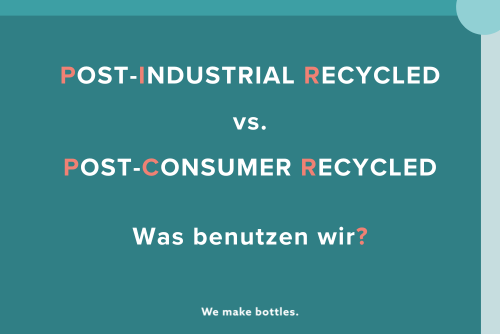
More and more companies are looking for ways to make their plastic packaging more sustainable.Terms such as rPET, PCR and PIR are cropping up more and more frequently. But what exactly do these recycling options mean? And what role do they play in the production of PET bottles, food packaging and other plastic products with regard to the upcoming PPWR requirements of the EU?
What is PIR (Post-Industrial Recycled)?
PIR stands for Post-Industrial Recycled and describes recyclates that originate from production waste directly from industry. Examples are:
- Punching waste
- Sprues from injection molding
- Rejects
This plastic waste is collected, melted down and reprocessed into new granulate.
Advantages:
- Very high quality because the material is mostly single-variety.
- Simple and cost-effective to process.
Disadvantages:
- PIR material does not originate from the consumer cycle, which is why many regulations do not recognize it as a genuine recycled material in the sense of the circular economy.
What is PCR (Post-Consumer Recycled)?
PCR means Post-Consumer Recycled and describes recyclate from plastic waste that has already reached the end consumer - e.g. used PET beverage bottles, packaging from the Yellow Bag or from municipal collection systems.
Advantages:
- PCR actually closes the material cycle because new plastic packaging is created from used packaging.
- Meets the strict requirements of the PPWR (Packaging and Packaging Waste Regulation), which stipulates recycling rates and minimum recycled content.
Challenges:
- More complex sorting and cleaning required.
- Material properties may vary, which requires careful processing.
What does this mean for PET bottles and rPET packaging?
The use of PCR is now common practice for PET bottles in particular, and is only mandatory for beverage bottles (25%) according to the packaging regulations. According to the PPWR, 30% rPET is mandatory from 2030. For other applications, e.g. chemical-technical products, cleaning agents or non-food, PIR is also often used, and the use of PCR is now common practice for PET bottles in particular. According to the packaging regulations, these must consist of 25% rPET - from 2030, 30% rPET will be mandatory for all PET bottles.
Are hotfill applications possible with rPET?
A common prejudice is: “You can't hot fill with rPET.”
We at EPROPLAST will show you the opposite. Our bottles are designed to withstand up to 87 °C - even with rPET content.This makes them perfect for many hotfill applications in the food sector or for products that need to be hot-filled.
Our USP: Fast development and production
Whether rPET bottle, hotfillable packaging or individual design:
We are your partner for rapid development and production. Thanks to modern systems and many years of expertise, we realize customized packaging solutions in a short time - from design to series production.
Conclusion: PCR is the sustainable choice for your PET packaging
At EPROPLAST, we consistently use PCR material (rPET) to create packaging that not only offers the highest quality, but also meets the requirements of the PPWR regulation.
Whether food, beverages or chemical-technical products - we will show you how to make your PET packaging future-proof with post-consumer recyclate. This will give you a decisive head start in complying with legal requirements and underline your sustainable commitment to your customers.
Get in touch with us. We will show you how you can make your PET packaging future-proof and recyclable.